PM Yanukovych [mumbles on]: ...renovating the production and technology base of the facilities and developing their infrastructure, revamping the means...
President Kuchma [loses patience]: Bang! Let...let me stop you right there. That’s it. For starters...we heard this...at the national security council meeting...you and I...after [the ammo depot blaze at] Artyomovsk. I just requested [this handout] — too bad it’s not available — I could’ve come forward and read it out right next to you. Why must you read out what we’ve already heard? It’s already been said! Why did you [staff] have to prepare what’s already been said?
Conversely, today’s prisoners can be yesterday’s princesses. Take this fair lady/Gazprom partner, the one who brushed off gas supplies from places cheaper than Russia. Oh, we’re talking ‘97, not ‘09, here.
Her other partner served as Ukraine's PM at the time [1:53].
They called their party Hromada (Community), but soon went their separate ways.
She went on to become Ukraine's PM. And he went to jail. To US jail, that is. Not Gitmo, but anyway… How can you persecute opposition leaders like that?
What if he, too, wants to run for president? For US president maybe?
Can't you guys decriminalize a thing or two and give him a chance?
Yanukovych: These people that will be dismissed, they will receib...receive corr...corresponding severance packages upon dismissal, in accordance with the law. [...] The benefits...from the reduction of government officials’ headcount will not transpire until 2012. From then on, every year, undoubtedly, we’ll have quite substantial savings.
You mean, having 16 ministers instead of 24 will save us a fortune? Awesome! But wait... Is that the whole story?
It’s not. I mean look at the State Directorate for Affairs. This funny-name agency acts as the nanny state to Ukraine’s mammoth central government bureaucracy.
In FY 2011, its budget will balloon 27%, or by Hr. 292,856,700 ($36,822,962), to Hr. 1,343,862,300 ($168,973,394).
Now what about the Administration of the President? Wanna see the color of his money?
Ihor Indylo died one night shy of his 20th anniversary.
He and a friend had a little drink at the dorm in the evening. As the two parted, Ihor had an argument with an on-campus police officer and ended up escorted to the Shevchenko rayon police precinct.
Later in the evening, the faculty pleaded with the officer to let him out for the night. The officer declined, saying Ihor was misbehaving at the precinct and would be detained for three days.
As Channel 1+1 found out, ambulances had rushed to the precinct four times during the night but had refused to hospitalize Ihor. In the morning, the faculty called Ihor’s parents to tell them they could take their son’s body home.
The police side of the story: Dead-drunk and unruly, Ihor fell and hurt himself. Three times.
However, the autopsy report somewhat contradicts that account, Channel 1+1 says.
Shockingly, the autopsy had been performed before the parents learned of their son’s death. The pathologist wouldn’t allow them to fully examine his body.
Ihor’s relatives thought he had choked. “All this time we had this version that he choked,” says Ihor's mother as she fights back tears.She then reads from the autopsy report: “Brain hemorrhage, skull fracture, damage done as a result of impact with a blunt object.”
Police are now putting pressure on students to testify that Ihor had started a brawl and arrived at the precinct with his skull already fractured. (That’s what the students told Channel 1+1 in phone calls.)
The faculty says Ihor didn’t have drinking problems. An eye witness says Ihor looked fine as he stepped into the police car.
Yanukovych says he wants to know what happened as Shevchenko rayon police chiefs have been suspended in the ongoing probe.
I’ll tell you what happened, Mr. President. It’s “Ukraine for the People,” remember?
As long as the people of Ukraine don’t act like the people of France, Greece and Romania, you can sleep well.
A few more facts and figures. Ukraine employs a police force of 302,000 for a population of 45,905,300 (2010). By comparison, the U.S. employs a police force of 883,600 for a population of 305,529,237 (2009).
The SBU, our security service, totals 33,000. That’s the size of the FBI.
Size means security? Wrong. It means corruption, mismanagement and brutality.
This law enforcement culture had flourished under Kuchma and Yushchenko. (Anatoliy Mohyliov, the current minister of the interior, served as the Crimean police chief under Yushchenko. And boy did he police those Crimean Tatars.)
Upholding the law of the jungle requires a lot of people skills.
You care about your country. You care about denuclearizing everyone but yourself and your allies. You made it happen in Ukraine.
When my country gave up its nukes — the world’s third-largest arsenal — it didn’t happen in a referendum. It didn’t happen in a classroom. It happened in Kuchma’s bedroom.
You treasured my country’s ability to trade its national interests for nothing but IMF loans and some aid.
As you know, the loans did us no good and the aid fell short of delivering the results it did in Eastern Europe. After all, from your Moscowcentric point of view, Ukraine’s “fledgling democracy” didn’t belong in Europe. The State Department pigeonholed us into “Eurasia” (Non-West/Little Russia), a class from which we never really graduated.
Bottom line, you took advantage of Ukraine at a tender age.
In an ideal world, you should have kept your IMF loans/aid, and we should have kept some of our nukes. We should have developed in a different way politically, economically and militarily.
Hindsight is always 20/20. Now what about foresight?
By continuing to take advantage of Ukraine whenever you can, you’re turning friends of America into a scarce commodity here.
The more Ukraine gets raped at home and abroad, the more we Ukrainians will remember it. The more you support our corrupt leaders, the more we’ll resist it. And once the pendulum swings in our favor — in the Ukraine-first favor — we’ll try to do it right. We’ll try not to repeat the mistakes of the Orange era.
President Viktor Yanukovych: God, responsibility, humility, elections, freedom, democracy, budget, debt, poverty, crumbling economy, corruption, development, his team, Ukrainian people, effective government, rebuilding the economy and the welfare state, government reform, professionalism, Rada rapport, transparency, governance, need for a strong opposition as a safeguard for democracy, stabilnist, strong parliamentary majority [applause], need for overcoming divisions, need for cleansing our hearts of vanity/egoism/vanity, need for conceding defeat, Bible quote (Matthew 5:25), peace, reconciliation, cooperation, Rada rapport, government reform, judiciary reform, Constitutional reform, special interests, public good, ordinary people, middle class, intelligentsia, business, Rada-Cabinet-President rapport, defeating poverty, unifying the country, prosperity=unity, poverty=conflict, strategy of development, capital accumulation (wrong path) v. postindustrial society (right path), abandoning wild capitalism, embracing competition, knowledge economy, high-tech industries, science, catching up with the developed world, strategy of innovation, team, priorities, international division of labor, more government no, more market economy yes, deregulation, investment, IMF, rebuilding trust, stabilnist, fighting corruption, creating a level playing field (no easy task), political will (I’ve got it), clear foreign policy vision, policy that best suits Ukraine’s national interests, Ukraine as an East-West bridge, integral part of Europe & the former Soviet Union (looming into view: First Lady Lyudmyla Yanukovych & Grandson 9:37-9:47); equal power and mutually beneficial relations with Russia, the EU and the US, meeting the challenges, coming together internationally, humanity and Ukraine need the EU, energy, food, environmental safety, we’re ready to participate as a non-aligned European state, hope Rada will approve my foreign policy, as I assume the office of the head of the Ukrainian state, I want to tell the people of Ukraine that all my promises made to them will be fulfilled, we’ll pay back the wages/pensions in arrears, we’ll downsize the government (starting with my staff — applause), actions speak louder than words, result-oriented work in the name of Ukraine’s prosperity is my credo, I count on your support, I count on the support of the international community, which welcomes a strong and stable Ukraine, so help us God!
Hurry up, Mr. President! Patriarch Kirill is waiting!
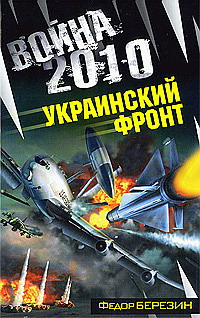
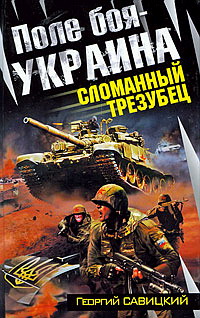
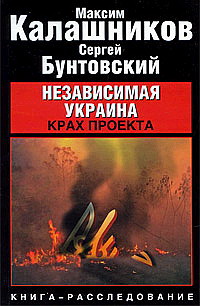
From Russia with love: a collection of Russian military fiction: War 2010 The Ukrainian Front by Fiodor Berezin (left) The Epoch of the Stillborn by Gleb Bobrov (right) After the Battle — Ukraine The Crushed Trident by Georgiy Savitskiy (left) Independent Ukraine The Undoing of the Project (right) by Maxim Kalashnikov, Sergei Buntovskiy
As Obama stimulates Putin’s reset button, the Kremlin’s propaganda machine is laying the groundwork for Operation Barbierossa (with Tymoshenko/Yanukovych as Barbie).
Who draws the first blood? Ukraine does. Any problems with that?
Remember: From the Soviet point of view, Finland started the Winter War; from the Nazi point of view, Poland started WW II.
Below are two fact-meets-fantasy scenarios outlined in a Russian television program, in which Ukraine gets repeatedly called “republic”— Soviet-style. (Since independence, Ukraine has no republic in its official name.)
Scenario 1 Anti-Russian western Ukrainian troops surge into Crimea like Nazis to terrorize the local Russian population. Kyiv cracks down on the Russian Black Sea Fleet in Crimea, cutting off communications. Moscow sends in reinforcements from the neighboring Russian region of Kuban. Kyiv sends in reinforcements from neighboring Ukrainian oblasts.
Ukraine: Kerch Mechanized and Simferopol Artillery Brigade, 5,000 + two brigades from Dnipropetrovsk and Mykolayiv, 10,000 + special forces, 4,000
Russia leads in troops and warships; Ukraine leads in air defense: more than 100 SAM systems + more than 200 interceptor aircraft (“It’s a lot for the not-so-large territory of the republic.”)
Romania, Poland and Hungary step in “to support Yushchenko.” A NATO task force (10 warships) based in Poti and Batumi prepares to engage the Russian Black Sea Fleet. Turkey foments Crimean Tatar irredentism. (Kyiv supports Crimean Tatars in land conflicts and squatting against the Russian population of Crimea.)
Bottom Line If Russia loses, Crimea will follow in Kosovo's footsteps, with the establishment of a pro-Ukrainian puppet regime supported by U.S. Navy bases. Turkey will like it. Projected war outbreak: Early 2010 (“to retain power, Viktor Yushchenko may opt for such provocations”).
Scenario 2 “Another scenario of developments is connected with another former Soviet republic: Georgia. If military conflict flares up on its territory again, it will mark the beginning of a war between Russia and Ukraine.”
Background: regular Ukraine-NATO military exercises + Ukraine’s arms supplies to Georgia
Bottom Line If Ukraine loses, the country will fall apart. Russia will claim Crimea, along with the right to keep its Black Sea Fleet after the rental agreement expires in 2017. (The victory will be offset by international isolation and domestic crisis).
If Russia loses, the Russian Black Sea Fleet will leave Sevastopol and there will be no more Russian influence in Crimea.
The news anchor's caveat: Make no mistake, according to international norms, Crimea is an integral part of Ukraine and I’m convinced that Russia will never fight for this territory. But Ukrainian politics of the last few years suggests that there are still some who are eager to provoke a conflict in the hope of the international community’s intervention, forgetful of the fact that managed conflicts are always fraught with heavy bloodshed. And there are always those willing to do the fighting. In fact, some Ukrainians, for years, have been fighting Russia, literally, and they’re not shy about it.
Background: UNA-UNSO’s involvement in Abkhazia, Chechnya and South Ossetia; Yushchenko’s decree celebrating “the centennial of Roman Shukhevych [1907-1950],” an officer of the SS, which killed “about 250,000 Jews, 1,000,000 Ukrainians, 500,000 Poles, 100,000 people of other ethnicities.”
Well, well, well. Does Shukhevych’s short-lived collaboration with Nazi Germany equal long-standing Soviet-Nazi cooperation? How does the training of Wehrmacht tank crews and Luftwaffe pilots (in Kazan and in Lipetsk respectively) compare to Shukhevych's resume?
What about the mustached blessing of the Molotov-Ribbentrop Pact? Of course, Ukraine gained in territory — populated mainly by Ukrainians — and lost 7,000,000 lives. Fair enough by the Kremlin's standards, right?
Now, why in the world would Yushchenko want to start a war with Russia? To give Russia the pretext for partitioning Ukraine?
Would Obama drop the reset button and rush to Ukraine’s defense should Russia start the war — much less should Ukraine start the war?
That's what Transatlantic Trends says, a project of the German Marshall Fund of the United States (www.gmfus.org) and the Compagnia di San Paolo (www.compagnia.torino.it) with additional support from Fundação Luso-Americana (www.flad.pt), Fundación BBVA (www.fbbva.es), and the Tipping Point Foundation.
In 2009, seven-in-ten Europeans (70%) favor the European Union providing security assistance for emerging democracies such as Ukraine and Georgia. And a majority of Americans (68%) back Washington taking similar action. Strong majorities of NATO members (62%) and Americans (66%) favor NATO providing such assistance.
As a Ukrainian, I'm flattered but not at all placated.
Whatever the accuracy of the poll data, I consider such assistance unrealistic and unreliable. I take my cues from Moscow-first policies pursued in Washington and Berlin.
In the real world, Ukraine has only itself to rely on. And there's only one way Ukraine can deter aggression: renuclearize.
Faced with superior conventional forces on its northeastern border, Ukraine should build survivable nuclear forces capable of inflicting unacceptable damage in retaliation. If Pakistan can do it, so can Ukraine.
This would cost a lot of money but would save a lot of lives, on both sides.
In late 2004, Yanukovych's Party of Regions set the trend when it cast its lot with Paul Manafort and Rick Davis of the GOP camp. By that time, as it recently turned out, Yanukovych had also done business with the folks who now run the American Institute in Ukraine.
In 2007, Yushchenko's NUNS, according to some sources, drew expertise from the Democratic talent pool, headed by James Carville, Bill Clinton's chief strategist.
In 2008, Tymoshenko became involved with Kenneth Murphy, an American lobbyist who reportedly followed her to high-level bilateral talks — without having a security clearance.
She now has expanded her horizons. Please welcome her new would-be partner, AKPD Message and Media, the company whose A stands for Axelrod, that is, David Axelrod, Obama's right-hand man!
So alleges King Makers for Tymoshenko, an Ukrayinska Pravda article by Mustafa Nayem. The author claims having obtained a PowerPoint presentation from a source whose identity he does not want to compromise.
UPDATE In the follow-up article, published today, Nayem names a few more names:
John Anzalone, “the best pollster you’ve never heard of” (Washington Post) Peter Giangreco, local staffing (a top consultant to Blagojevich’s campaigns) Paul Neville, campaign scheduling Andrew Bleeker, online campaigning Michael Organ, online campaigning
If Tymoshenko says yes, we'll have a “Yes, She Can” campaign, run by a foreign government.
This should make even Yanukovych blush, hopefully.
It says Kyiv here. At a joint press conference, Vice President Biden said Kiev.
Nitpicking aside, it was a rather nondescript press conference, full of stale reassurances and mantras, devoid of breakthroughs and questions from reporters.
The lively part came afterward: President Yushchenko and VP Biden visited the Holodomor Memorial, where they planted arrowwood trees and shook hands with the public.
Next, they relished two Coca-Colas at a local pub, whereupon Mr. Biden left for a meeting with PM Tymoshenko.
Back with a quote about the “nationalist” Ukrainian Foreign Affairs Ministry;
Back with less prevarication about their views/connections;
Back with a noble mission of educating Ukrainians about NATO; and
Back with more appeasement toward the good old benevolent Kremlin.
Discover these fresh offerings in Say No to NATO, an article by Graham Stack at Russiaprofile.org.
I found this article thanks to a French-language anti-NATO site that calls my blog “Ukrainamania” and puts it in the ranks of neocon public relations. What can I say? I’m flattered! Just get my blog’s name right, OK?
In Say No to NATO, the American Institute in Ukraine (AIU) finally abandons any pretense of neutrality and nonalignment: “Ukraine’s NATO membership is not in Ukraine’s interests. Nor is it in U.S. interests. All that it will create is a nuclear trip wire at the heart of Europe.” What took you so long, guys?
Now that you’re so brave, straightforward and openhearted, let’s examine the Kremlin’s hymnbook quote by quote:
Anthony T. Salvia, AIU Executive Director: In Ukraine, U.S. opinion is often represented as being monolithically in favor of Ukraine’s future membership of NATO. We’re here in Kiev to show this is definitely not the case.
Do you have any scientific — and independent — U.S. poll numbers? I, for one, can’t argue with the poll numbers in Ukraine. According to various polls, support for NATO membership clocks in at 20-30%, nowhere near the 77% found in Georgia. Which brings us to the question of why you’re here. You gave up on Georgia and focused on Ukraine. You’re here to tell us what to do with our security. Moreover, you think that our security has nothing to do with your security. Well, think again.
Doug Bandow, a guest speaker at AIU: The U.S. should refrain from making promises to Ukraine it cannot honor, but which might embolden Ukraine to provoke a conflict. The Ukrainians should realize that the US will never fight Russia over Ukraine. Ukraine must learn to rely on its own resources for securing its sovereignty, and not to trust to U.S. promises.
Would the U.S. fight Russia over Latvia or Poland under Article 5? (Just curious.) At any rate, thank you for disarming and disowning us! Indeed, today, we Ukrainians only have ourselves to rely on if attacked by our friendliest neighbor in the universe, Russia. If and when that happens, you shouldn’t expect us to control our missile technology as we promised you in 1998. We’ll be too busy. See if you can intercept a bootleg SS-18 with the “reset button.”
Salvia: Ukrainian NATO membership, by ruining relations with Russia, would make Ukraine less secure than it is, not more. And it would also harm U.S. security, by ruining the chances for cooperation with Russia over vital issues such as Afghanistan, North Korea and Iran, all issues that the new administration has said it will prioritize.
If you ruin our security with your art of appeasement, your cooperation with Russia over Iran and North Korea will become a joke. And the Kremlin will have no regrets.
Salvia:There are other mechanisms available for strengthening Ukrainian security. One is a new European security treaty, similar to that being proposed by Dmitry Medvedev. The other is for European Union membership. The Kremlin is basically open toward Ukraine’s future EU membership, especially if it is an alternative to Ukraine’s NATO membership.
A new European security treaty? You mean, a new Yalta Conference? The EU is a security organization and the Kremlin is open toward Ukraine’s future EU membership? Really? Can you call the Kremlin again and come back with the details?
Yelena Biberman, a U.S. Embassy policy specialist engaged in research on Ukraine’s foreign ministry (according to the article): Foreign ministry officials are ideologically anti-Russian and nationalist to the extent that they may not always be able to objectively assess Ukraine’s real national interests. They believe that Russia is inherently imperialistic and bent on regaining control over Ukraine as a step to rebuilding its empire, and NATO membership is the only way to stop this. Even for a new Ukrainian president, it will be very hard to change their perspective.
So, to restore objectivity, the new Ukrainian president should by all means try to change their perspective, as in “change Putin believes in?” That’s a very insightful perspective from an FSO trained at Moscow State Institute of International Relations (MGIMO). Has the U.S. Embassy outsourced some of its staff to AIU or vice versa? What’s next? A garage sale of “reset buttons” and “Made in USSR” memorabilia? Clientitis classes? There’s nothing new about the fact that Russia hasn’t refreshed its historiography since the Brezhnev era — if not for a brief moment during perestroika. But, for State’s sake, aren’t there any post-Soviet history textbooks on Amazon.com or at Brown? Doesn’t Prof. Sergei Khrushchev have any?
Salvia:We don’t engage in lobbying, but work exclusively in the public field holding conferences, talks and round table discussions. What we are trying to tell Ukrainians is simply that you can be pro-America and pro-European without having to want to join NATO.
Tell it to the Poles. Tell it to the Czechs. Tell it to the Slovaks. Tell it to the Hungarians. Tell it to the Romanians. Tell it to the Bulgarians. Tell it to the Lithuanians. Tell it to the Latvians. Tell it to the Estonians. Tell it to the Georgians. Tell it to the IRS.
Of course, the percentage of Ukrainian citizens who speak Russian only or surzhyk is higher, due to the Soviet policy of Russification and its lingering legacy. But these people are not ethnic Russians. Likewise, just because I speak idiomatic English, it doesn’t mean I'm British, Canadian, Australian or American.
I wonder if Obama swallowed Putin’s quote. Getting a sense of Putin’s soul can be fraught with fraud.
State sovereignty must be a cornerstone of international order. Just as all states should have the right to choose their leaders, states must have the right to borders that are secure, and to their own foreign policies. That is true for Russia, just as it is true for the United States. Any system that cedes those rights will lead to anarchy. That's why we must apply this principle to all nations -- and that includes nations like Georgia and Ukraine. America will never impose a security arrangement on another country. For any country to become a member of an organization like NATO, for example, a majority of its people must choose to; they must undertake reforms; they must be able to contribute to the Alliance's mission. And let me be clear: NATO should be seeking collaboration with Russia, not confrontation.
Sound interesting? Wait until you read what presidential candidate Obama wrote in a letter to the Ukrainian Congress Committee of America in October 2008.
Political humor gets even more political and even more (or less) humorous when it crosses cultures.
Channel 1+1 presents...Barack Obama Superstar: The Untold Story.
As President Obama visits Russia, it’s important that the olive branch he brings to the table does not hit the dove on the head.
Naturally, the Obama-Forrest Gump-Che Guevara-Larry King-Chavez sequence may entertain U.S. conservatives and irritate U.S. liberals. Anyway, to a Ukrainian like me, the Putin part looks very close to home.
The cartoon was produced by CFC Consulting, “a Ukrainian company with a global sense of humor,” in partnership with Future Media Arts.
You’d think that the only Washington spin doctor to promote Yanukovych and his anti-NATO/pro-Kremlin platform would be Paul Manafort. You shouldn’t. Meet the American Institute in Ukraine!
In his recent article, Ukrayinska Pravda’s Serhiy Leshchenko exposes this pseudo-independent organization, whose talent did business with Yanukovych as early as in 2003.
What’s in a name? James George Jatras. The American (read: Appeasement) Institute in Ukraine (AIU) lists him as one of his associates, and so does Squire Sanders Public Advocacy, LLC. (Public advocacy...hmmm...sounds so much sweeter than lobbying, doesn’t it?) Jatras’ profile at Squire Sanders credits him with a wealth of experience:
Serving on the U.S. Senate Republican Policy Committee and as an American Foreign Service Officer in the Office of Soviet Union Affairs;
Engaging in versatile legislative advocacy and international projects;
Participating in panel discussions at the Cato Institute, the Heritage Foundation and the International Strategic Studies Association.
On March 6 and March 24, 2003, Jatras and his partner Patrick O’Donell at Venable, LLP inked two public relations deals with Alex Kiselev, a Yanukovych representative. Under the deals, Yanukovych was supposed get a dose of favorable publicity and networking in Washington, including, possibly, a meeting with then-President Bush. Price tag: $20K+$60K (for the meeting with Bush, if arranged).
Ukrayinska Pravda offers copies of the agreements:
For some reason, Yanukovych rescheduled his visit. A third agreement with Jatras and McDonnell was signed on November 24, 2003.
Cooperation between the Jatras and Yanukovych camps continued well into the fateful year of 2004. In December 2004, amid the Orange Revolution, Spinck put his signature on the addendum to a $23K+$15K Yanukovych-related consulting agreement with db communications, LLC.
What does AIU do? “AIU is a privately funded U.S. nonprofit organization and neither receives, solicits, nor accepts funds from any government,” so they say, without disclosing their donors
“The activities of AIU are strictly informational and educational. AIU does not engage in lobbying, either in the United States or abroad.” But AIU talent has engaged in lobbying in the United States on behalf of Ukrainian clients, and the website fails to mention that, right?
Besides, if their current activities encompass “producing and distributing monographs, commentaries, analyses, news, bulletins, press releases and other informational and educational materials,” then why do they tilt to one side only? Does AIU offer a single monograph, commentary or analysis that explores the benefits of Ukraine’s membership in NATO, both for NATO and Ukraine?
If you click “About Us,” you will find this:
AIU takes no position on NATO per se. But whatever NATO's future may be, AIU questions the wisdom of further expansion without clear and convincing evidence that it would directly enhance U.S. security interests, defined as defense of American territory and the American people; protect the territorial defense of its member states, consistent with the sole mission of the alliance as specified in the North Atlantic Treaty; contribute to the security of countries considered for expansion, beginning with Ukraine; and not injure relations with Russia, which must be an ongoing priority of American foreign and security policy. There is reason to question whether any of these criteria exists now or will exist in the foreseeable future.
So if you “question whether any of these criteria exists” and have some foreign policy credentials to support your skepticism, here’s your chance! According to Ukrayinska Pravda sources, you can make $3K in speaking fees, travel and hotel expenses covered. In other words, Western scholars and policy makers who strongly oppose the idea of Ukraine’s membership in NATO and want make a few bucks would be more than welcome!
Ironically, had AIU been around in 2003-2004, then-PM Yanukovych would have probably sent trainloads of his supporters to rally outside its office. At that time, he firmly stood for NATO membership and his party rubber-stamped pro-NATO legislation. In fact, he even authored a white paper that called for NATO membership by 2008.
Serhiy Leshchenko says his interest in AIU began with an invitation to participate in one of the events held at that organization — front organization, as it turned out. Guess who called him? Dmytro Dzhangirov, a blatant Kuchma-Yanukovych propagandist whose two-minute-hate-style programs had blasted Yushchenko during the dystopian 2004 presidential campaign. Today, Dzhangirov mainly works for Kyiv mayor Leonid “Kosmos” Chernovetsky. But...you never know.
Apparently, AIU has found Dzhangirov to be an asset to their ill-concealed “disarm and disown,” “putting Putin first,” “quid pro-Kremlin” campaign.
Bandow’s association with the Cato Institute was supposed to lend credentials to the one and only view promoted by AIU: that Ukraine is bad for NATO and that NATO is bad for Ukraine. The fact that in the mid ‘90s Ukraine had sacrificed the world’s third-largest nuclear arsenal on the altar of U.S. security gets the silent treatment.
Back to Bandow: Leshchenko called the Cato Institute and asked whether Bandow represented their official policy views. Chris Kennedy, Director of Media Relations, said Bandow represented his views only.
Last, but definitely not least, Leshchenko notes, the Russian version of the AIU web site spells the organization’s name as Американский Институт на Украине rather than Американский Институт в Украине. What’s the difference? It’s the Russian way of saying the Ukraine (province, territory) as opposed to the Ukraine (independent country).
In this regard, I hope U.S. Vice President Joe Biden gets some polit-savvy toponymical tips before he visits Ukraine at the end of July. But my hope already lacks audacity. The siren calls of appeasement artists are getting stronger day by day. Some of them, such as Anthony T. Salvia of AIU, even couch their propaganda in romantic Reagan-era terms. Apparently, the Appeasement...uh...sorry, the American Institute in Ukraine has a busy work schedule.
President Obama will visit Russia on July 6-8, and all Ukraine will get is Vice President Biden two weeks later. As a Ukrainian, I think my country is being marginalized by this Eurasian pecking order.
Eland states my country’s name as “the Ukraine.” Most English-speaking Ukrainians consider such usage insulting or ignorant. To us, “the Ukraine” means a territory, not a country, and underscores centuries of Russian domination. Since independence, Ukraine has persuaded the U.N. and the U.S. to drop the article and switch from Kiev (the Russian name)to Kyiv (the Ukrainian name).
So either Mr. Eland knows little about Ukraine, or “the Ukraine” carries a coded message from the Independent Institute. By the way, Obama said “the Ukraine” during the presidential debates. To me, this came as a shock. How could the chairman of the Senate Subcommittee on European Relations say that? Hadn't he mentioned his visit to Ukraine in The Audacity of Hope?
Indeed, U.S. foreign policy toward Ukraine, in practical terms, is all about chicken Kiev change.
It can be summarized by the following quote from Don’t Admit the Ukraine into NATO:
In any honest assessment of U.S. security goals, the faraway Ukraine is not strategic to the United States. To Russia, given its history of being invaded by foreign powers, the Ukraine, a large neighboring country, is much more strategic than even its small Baltic neighbors.
So “the faraway Ukraine” is no longer as “strategic” as it was in 1993-1995, when Washington was twisting our strategic arms? And Ukraine has never been invaded? Not even by Russia?
In other words, “disarm and disown.” That’s the policy. Wait, how about this one: Wasn’t Czechoslovakia more “strategic” to Germany than it was to France and Britain when they signed the Munich Agreement?
A fool and his nukes are easily parted. When Ukraine — lulled by the “end of history” — gave up its nuclear deterrent, it did one hell of a foolish thing. It gave up power and got poverty in return. The IMF loans we received in exchange for our 5,000 warheads did not help us to the “sweet harvest” that U.S. President Bill Clinton promised us. Instead, they helped our President Kuchma convert his sweet reform rhetoric into an overnight billion dollar fortune for his family.
Contrary to Western clichés, Ukraine did not just “inherit” its nuclear arsenal from the USSR. Ukraine invented and ingested a huge part of that arsenal. Ukraine produced some of the deadliest ICBMs in the Soviet nuclear forces and, on orders from Moscow, deployed them on its territory. Ukraine paid the price of collectivization, industrialization, Chernobyl and grabitization.
Now, what benefits did Ukraine get from its denuclearization? Or, in a narrow sense, what did “friends of America” in Ukraine get from “friends of Ukraine” in America? Prosperity? No. A ticket to Western Civilization? No. Constant threats from Moscow? Yes. A bunch of appeasement artists from Washington? Yes!
So what should Ukraine’s story tell Iran and North Korea?
A. Hey, why don’t you drop your weapons like Ukraine did? B. Hey, why don’t you follow Ukraine into the NPT and the MTCR? C. Wanna be bossed around? D. Wanna get your chicken change?
Finally, what effects would Russia's appeasement-induced adventurism have on U.S. security goals?
VOA’s Myroslava Gongadze, wife of the murdered journalist Heorhiy Gongadze, interviews Deputy Secretary of State James Steinberg, who visited Kyiv in late April.
Outgoing U.S. Ambassador William Taylor echoes Steinberg’s “don’t worry” position. In the interview below, he explores the benefits of a Yushchenko-Tymoshenko truce, talks about his role in having the U.S. government switch from Kiev to Kyiv, and discusses Obama's travel schedule.